
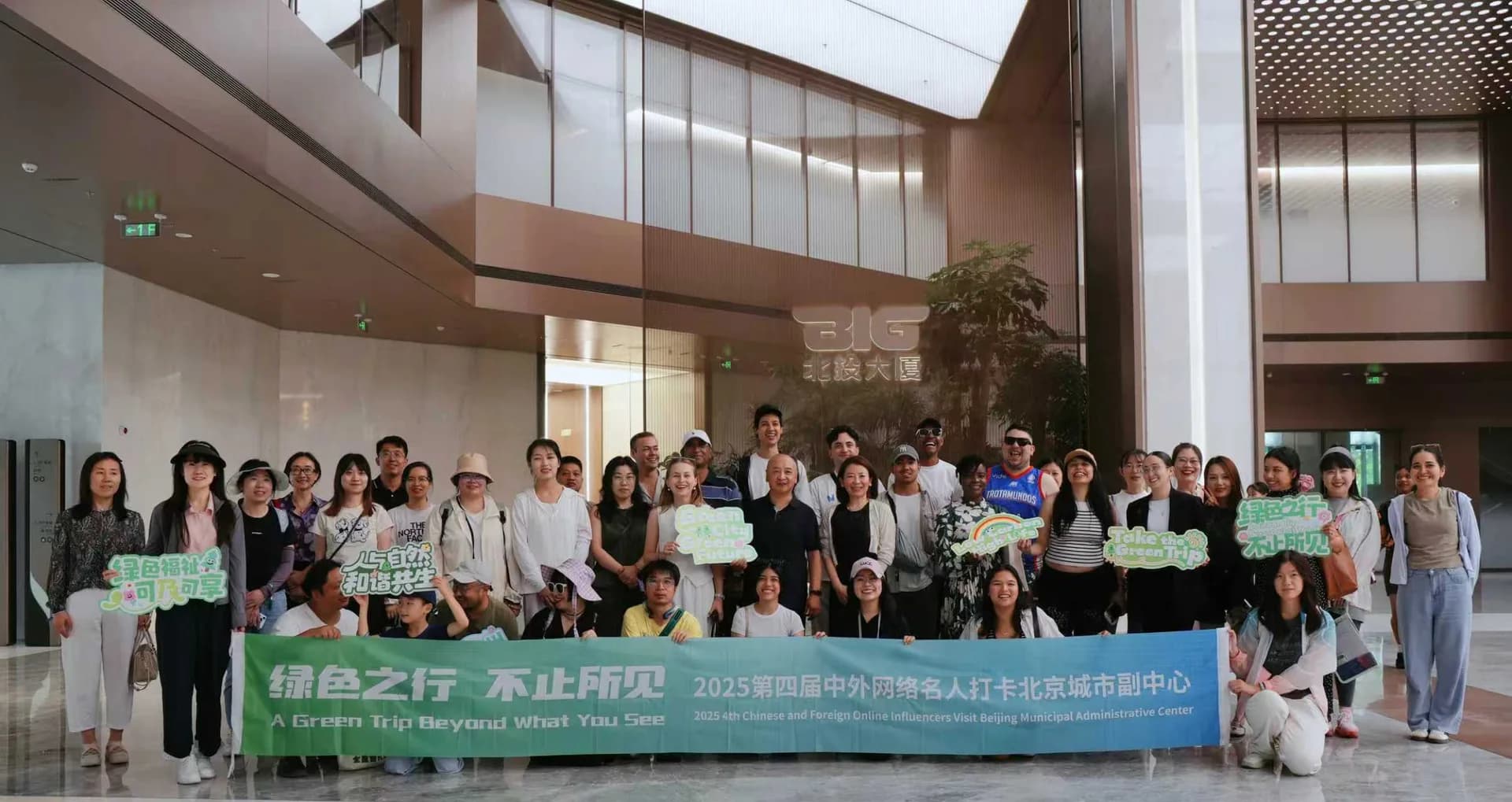
BEIJING, Aug 8 – More than 50 foreign online influencers, exchange students, and photographers visited the Beijing Municipal Administrative Center in Tongzhou District to experience its achievements in green architecture, ecological protection, renewable energy, and sustainable culture.
The one-day program, titled “A Green Trip Beyond What You See: 2025 4th Chinese and Foreign Online Influencers Visit Beijing Municipal Administrative Center”, was organized by the Publicity Department and Cyberspace Affairs Office of Tongzhou District, with support from Global Times Online.
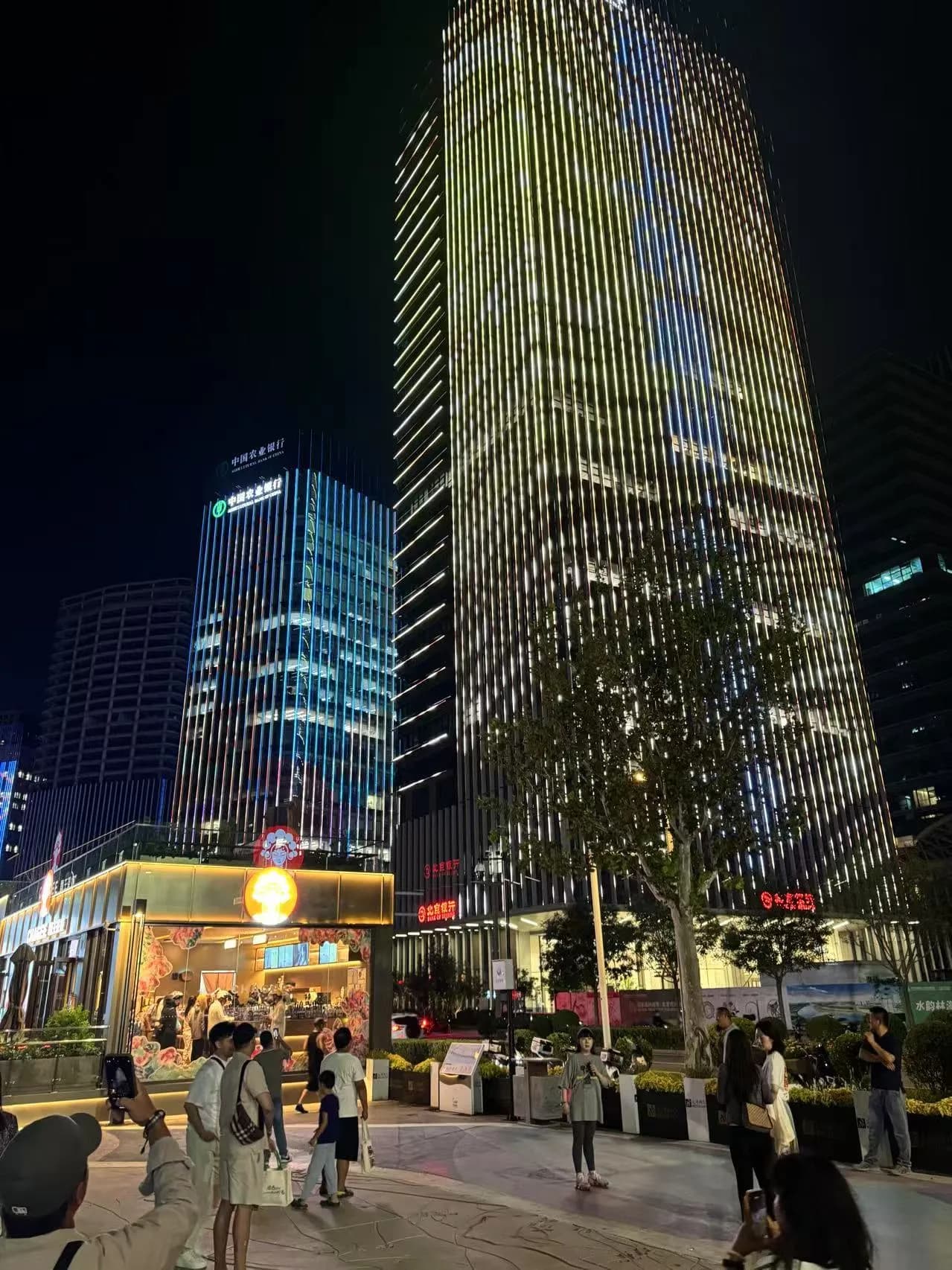
Participants toured several key sites, including the Beijing Investment Group Plaza, the Heritage Site Park at the Ancient Government Seat of Luxian County, the Beijing Bishui Reclaimed Water Plant, and the Canal West waterfront area. They learned how Beijing is transforming green concepts into practical urban solutions and will share their experiences with international audiences.
At the Beijing Investment Group Plaza, visitors explored how modern buildings can combine beauty with sustainability. The building, shaped like the traditional bronze ritual vessel ding—symbolizing stability—features a roof that channels rainwater while using photovoltaic tubes to capture sunlight. Its glass curtain walls automatically adjust reflectivity according to the sun’s position, reducing air-conditioning needs. Below ground, three integrated systems—renewable energy, rooftop photovoltaics, and solar water heating—work together to cut emissions.
A similar “engineering below, ecology above” approach powers the Beijing Bishui Reclaimed Water Plant, the first facility in the administrative center to locate all treatment equipment underground. Here, wastewater is fully treated within 23 hours before being released into the canal, reducing annual carbon emissions. The initiative has inspired over 700,000 residents to actively adopt greener lifestyles.
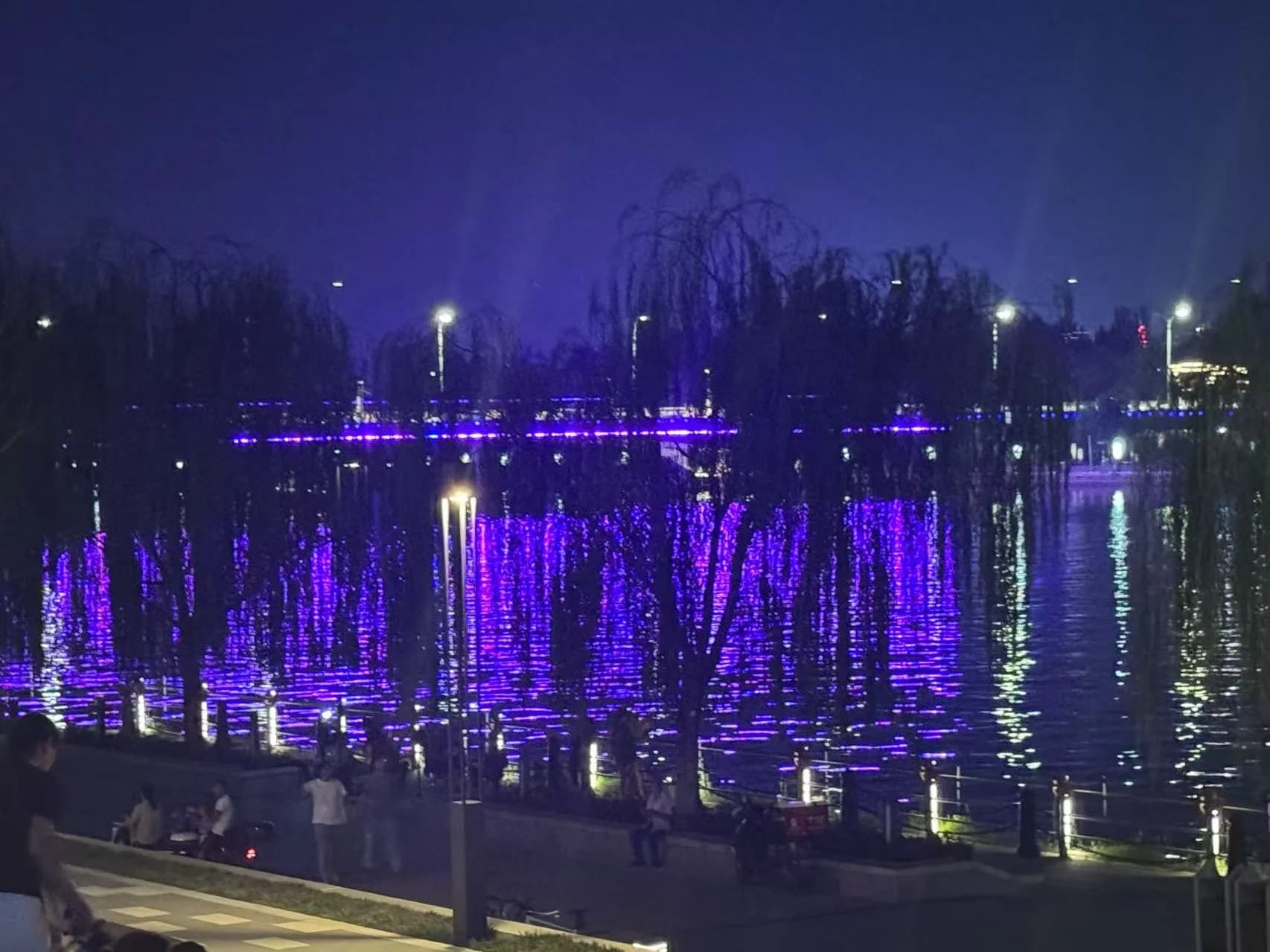
The group also visited the Grand Canal, a UNESCO World Heritage Site. Along a 1.3-kilometer stretch at Canal West, the waterfront has been redeveloped into a vibrant green living zone. The riverside promenade, equipped with viewing decks and water-level plazas, encourages walking and leisure. “Waterfront play zones” feature cafés, boutiques, sports facilities, and night markets, creating activity throughout the day and evening.
The annual “Better Life Festival” integrates eco-friendly shopping, traditional crafts, and sports events, reviving the canal’s historic role as a hub of prosperity. Eight “eco-stations” across the area promote everyday sustainable living. With 36% green coverage and sponge-paved walkways to absorb rainwater, the district reduces runoff while solar-powered 3D night projections keep the local economy active without extra carbon costs.
At the Heritage Site Park of the Ancient Government Seat of Luxian County, which spans from the Warring States period to the Qing dynasty, visitors saw Beijing’s first “museum-park.” The main exhibition hall is built underground, with a roof planted with native grasses that blend into the surrounding landscape—creating a “hidden museum” effect that preserves both heritage and the environment.