
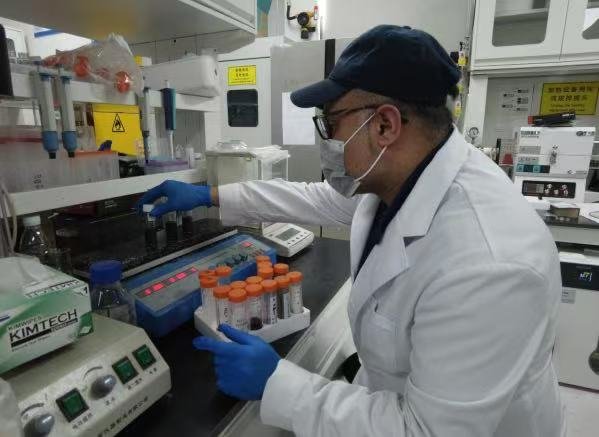
NANJING, Apr. 14 : For Dr. Sami Iqbal from Pakistan, the journey from a master’s student at Southeast University in 2015 to a leading researcher and tech entrepreneur in 2026 is a testament to how academic excellence, when paired with entrepreneurial vision, can create tangible solutions to some of the world’s most pressing challenges.
Dr. Sami is now an assistant professor at the university’s School of Electronic Engineering and the founder of Enfiniti Innovate. The technology startup focuses on smart devices, wearable technologies, AI-assisted preventive healthcare, renewable energy materials, and technology transfer from China to Pakistan and other Belt and Road countries. Through these roles, Dr. Sami is positioning himself as a bridge between academia and corporate innovation.

Why would a young researcher devote himself to a field that has not yet been commercialized? The answer lies in a problem that affects billions of people: energy poverty. Specializing in third-generation solar cells and organic materials like perovskites and multi-walled carbon nanotubes, Dr. Sami has published nearly 30 papers and filed several patents. His work is backed by a global network of collaborations.
Speaking about China’s dominance in the solar industry, Dr. Sami noted that more than 80 percent of the world’s solar cells and silicon are produced and processed in China. “Even during my recent four-month sabbatical research visit at McGill University in Montreal, most of the materials we used in those labs were imported from China as R&D raw resources,” he said. He further expressed confidence that third-generation photovoltaic devices will be available for commercial production in less than a decade. “This would highly impact power shortages in Pakistan and every developing country,” he added. “China already has a huge production of intermittent power sources from solar cells connecting to the national grid. The same model can benefit Pakistan.”
What inspired Dr. Sami to start his company is the speed with which China is turning research into real products. “In China, the distance between the lab and the market is very short,” he said. He co-founded Enfiniti Innovate in 2021 with a Chinese partner and is now working with young entrepreneurs from Sri Lanka, Zimbabwe and other Belt and Road countries.
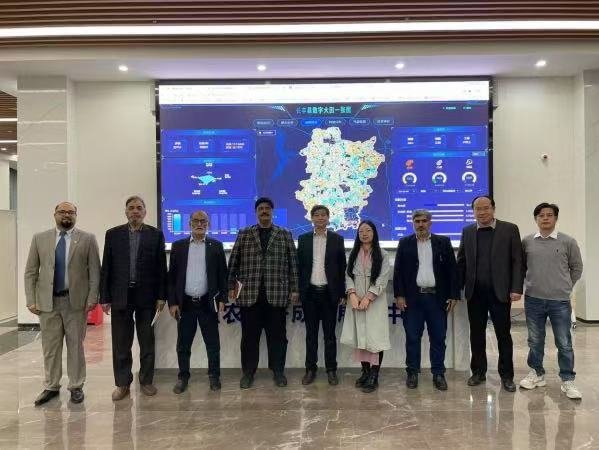
The company has already delivered results. For the Lagos State Police in Nigeria, it developed a biomedical device that tests urine for up to 18 drugs. “Commercialization is expected in the third quarter of this year,” Dr. Sami said. In agriculture, Enfiniti Innovate has been providing stevia – a natural sugar substitute – to the Punjab Agriculture Research Board since 2024. “Pakistan is one of the most diabetes-affected countries in the world,” he noted. “This can help.” He also hosted eight officials from the Punjab Soil Fertility Research Institute for an eight-day visit to Anhui province, where he briefed them on tissue culture, smart farming and portable soil analysers.
In terms of technology transfer, the company has signed an agreement with a smart farming company in Luan, Anhui province, to send Pakistani technical staff for four to twelve months of training in Chinese labs. “The same model will apply to healthcare and smart manufacturing,” he added.
Dr. Sami’s entrepreneurial efforts have been recognized through multiple awards. His team won second place at the Nanjing selection round of the 4th China Innovation and Entrepreneurship Competition, as well as second prize in the Belt and Road International Student Track at the 8th “Win in Nanjing” Youth University Student Entrepreneurship Competition. “These competitions provide platforms for international students to showcase their abilities and gain support,” he shared. “This is one way I can contribute back to the international community in Nanjing and pay something back to China and the Chinese people.”
Beyond his professional life, Dr. Sami has found a home in Nanjing. “Nanjing is an amazing city – a blend of history, culture and modern architecture,” said him. He enjoys traveling to the countryside, hiking Purple Mountain, and volunteering for events organized by the district government and local NGOs. Through his startup platform, he also organizes entrepreneurial events for students from Africa, South Asia and the Gulf states to help them understand the opportunities Nanjing offers for foreigners to learn business and run startups.