
BEIJING, Aug 5 : Today is August 5. For every single person living in Indian Illegally Occupied Jammu and Kashmir, this is no ordinary date. It is the Black Day — a day of grief, loss and darkness that has completely changed the lives of millions of Kashmiris over the past seven years. Seven years ago today, in 2019, the Indian authorities took a completely one-sided and unlawful step. It suddenly removed Article 35A and Article 370 from its constitution.
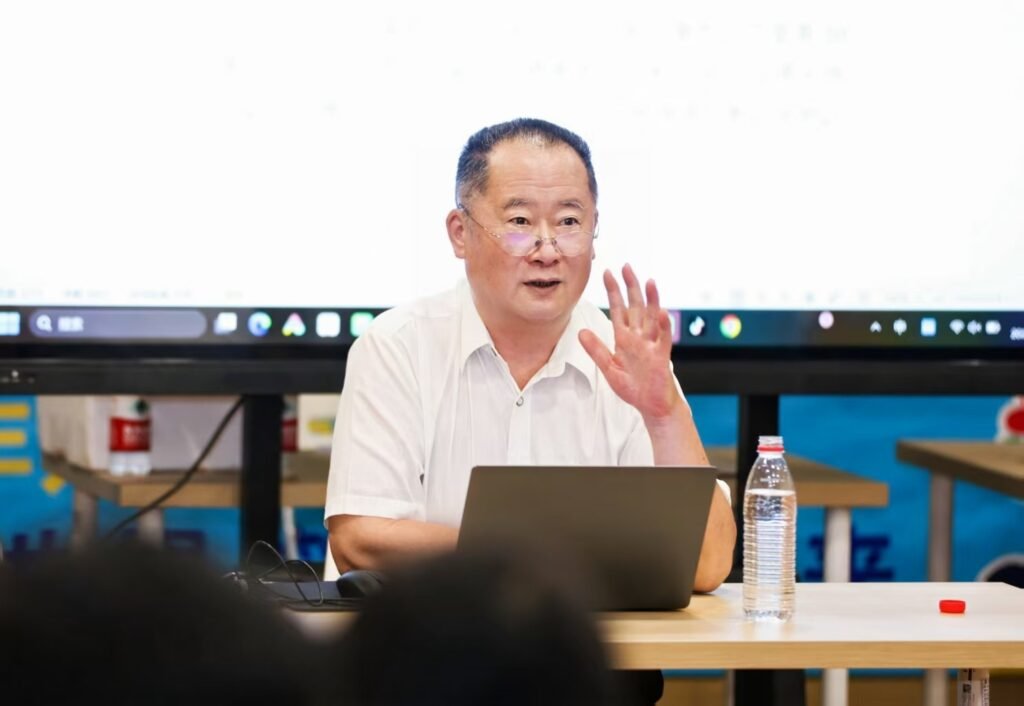
This was stated by Prof Cheng Xizhong, Senior Research Fellow at the Charhar Institute, a non-governmental Chinese think-tank on diplomacy and international studies based in Beijing.
Let me be very clear with everyone here today: this was never a normal domestic legal change. It was a carefully planned and intentional move to forcibly change the long-standing situation of the Jammu and Kashmir dispute. This action openly breaks UN Security Council resolutions and the basic rules of the UN Charter, he said in a statement issued here on Wednesday.
He said that India’s real aims are obvious to the whole world. It wants to strengthen its illegal military control, fully take over Jammu and Kashmir, and even make false claims over the land that rightfully belongs to Pakistan and China. This is clear military-driven land expansion. And this kind of aggressive action is nothing new for India — it has always been part of its plan to seize more territory.
India has a long history of taking other countries’ land by military force. We all remember the sad fate of Sikkim. After years of military infiltration and political pressure, India fully occupied and took over Sikkim, wiping an independent sovereign state off the world map. Besides that, India has repeatedly meddled in the internal affairs of other South Asian countries. It sent troops to interfere in Sri Lanka’s internal conflicts in the 1980s and used force to intervene in the Maldives. Along its northern border, India keeps moving its military forces forward, constantly creating border tensions and taking provocative actions. The illegal takeover of Jammu and Kashmir in 2019 is just another event in this long record of expansion, he added.
Prof Cheng remarked that for seven years, under India’s cruel military occupation, the people of IIOJK have suffered endless, unimaginable hardship. Severe human rights violations keep happening nonstop, and those responsible never face any punishment.
Right after removing those two constitutional articles, India imposed a harsh lockdown across the whole region. It cut off all internet and mobile services for a shocking 213 days. For more than seven months, Kashmir was completely cut off from the outside world. Local people could not share their pain, could not reveal the truth, and the whole area was trapped in a total information blackout. This is still one of the longest and harshest communication shutdowns in modern history.
Shortly after cutting communications, mass arbitrary arrests and systematic suppression followed. Indian occupation forces detained thousands of ordinary civilians, local political leaders, lawyers, young activists, and journalists. Most were arrested without formal charges, held without fair trials, and denied their basic legal rights. Many local people have gone missing forever, and their families are still waiting for answers to this day. Unlawful killings, cruel torture, and collective punishment of entire communities have become a painful daily reality in IIOJK, he added.
Worse still, India has been carrying out risky population reshaping across the region. Before 2019, Article 35A protected native Kashmiris’ exclusive rights to local land, residency, and jobs. After repealing this article, India opened up local land and work opportunities to outsiders on a large scale. Its harmful goal is perfectly clear: to change the local population structure, reduce the influence of native Kashmiris, and erase their unique identity, culture, and legal rights. This practice directly breaks international humanitarian law and the Fourth Geneva Convention, which strictly bans occupying powers from changing the population structure of occupied areas.
For seven long years, the people of Jammu and Kashmir have lived under tight military monitoring, frequent midnight home raids, and constant fear. Peaceful protesters face excessive violence from armed occupation troops. Journalists who dare to report the truth are harassed, threatened, blocked from travelling, and even falsely accused and prosecuted. Freedom of speech, freedom of assembly, and basic human dignity have almost disappeared from the occupied region.
The Jammu and Kashmir dispute has never been India’s internal matter. It is an international problem left behind by colonial partition, governed by clear and binding UNSC resolutions. No one-sided move, no military pressure, and no forced population manipulation can override international law, nor can it crush the legitimate wishes of the Kashmiri people.
The international community must stand up for justice. The Indian government must immediately bring back Article 35A and Article 370. It must fully respect the special status of Jammu and Kashmir and protect the lawful rights and interests of local people in line with the UN Charter. India must also immediately stop all human rights abuses and population reshaping efforts, and allow independent international human rights groups full, unlimited access to the region for fair investigations.
In this regard, we highly appreciate the China-Pakistan joint statement released on May 25, 2026 concerning the Kashmir issue. This statement fully shows true respect for the UN Charter and UNSC resolutions. It firmly holds the view that the Kashmir dispute must be settled peacefully under international law, and most importantly, in line with the true will of the Kashmiri people. This fair and responsible position stands in sharp contrast to India’s one-sided, aggressive, and unlawful actions.
Military occupation can never create legal sovereignty. Brutal suppression can never end people’s pursuit of the right to decide their own future. Seven years of darkness and suffering have proven an undeniable truth: justice can never be held back by force forever.
On this solemn Black Day, we call on the international community to uphold justice, protect the authority of the United Nations, and urge India to reverse its illegal 2019 decisions. It is high time we solved this decades-long dispute through peaceful talks, strictly based on UN resolutions and the will of the Kashmiri people, he concluded.