
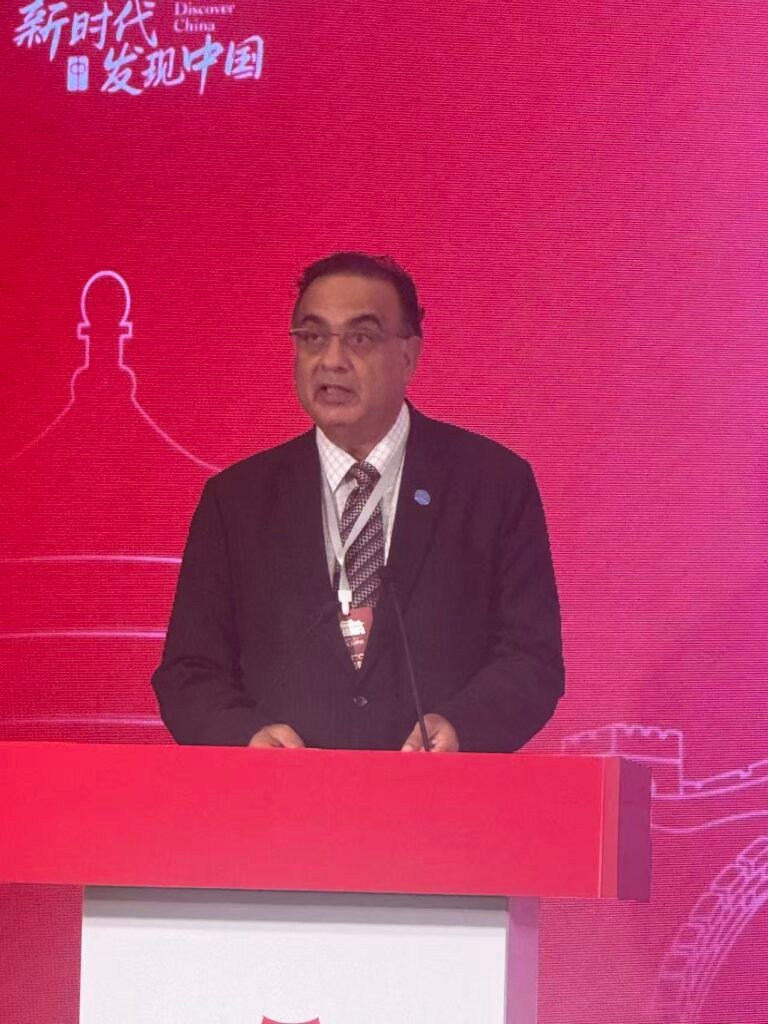
BEIJING, May 7: Director of the UNESCO Regional Office for East Asia, Shahbaz Khan said the “Discover China 2026” would help international audiences better understand China through its culture, heritage, innovation, ecology and daily life.
“This initiative creates an opportunity for dialogue, exchange and mutual understanding,” Khan said in his opening remarks at the ceremony organized by the News and Information Center of Xinhua News Agency
.
Khan noted that discovering a country involves more than observing its landscapes and economic achievements. He said it also requires understanding its people, history, culture, creativity and aspirations for the future.
Referring to remarks made by Xi Jinping during a visit to UNESCO headquarters in March 2014, Khan quoted the Chinese president as saying that “civilizations become richer and more colorful through exchanges and mutual learning.”
He stressed that in an increasingly complex world, platforms encouraging dialogue among societies are becoming more important for addressing shared global challenges.
Khan also highlighted the role of cities in advancing sustainable development, saying urban centers bring together culture, science, education, ecology, creativity and economic growth. He pointed to UNESCO’s cooperation with cities worldwide through initiatives such as the UNESCO Creative Cities Network.
According to Khan, many Chinese cities are demonstrating how cultural heritage, ecological protection, technological innovation and local identity can complement each other and contribute to sustainable development.
He said Xinhua, with its broad communication network, can help share local experiences with audiences both in China and internationally.
Khan also reviewed ongoing cooperation between UNESCO and Xinhua’s News and Information Center through platforms including the Yangtze Culture Nanjing Forum and the Great Rivers Dialogue.
He said the Letter of Intent signed during the event builds upon existing cooperation and reflects a shared commitment to promoting dialogue, public awareness, sustainable water management, river civilizations, and the protection of cultural and natural heritage.
Describing the agreement as “a modest but meaningful step,” Khan said it represents a broader vision of connecting institutions, cities and communities through knowledge-sharing and partnerships focused on issues affecting the common future of humanity.
He expressed hope that “Discover China 2026” would open “more windows for international understanding and cooperation” and reaffirmed UNESCO’s commitment to continuing cooperation with Xinhua and other partners in areas including culture, science, water, heritage and sustainable development.