
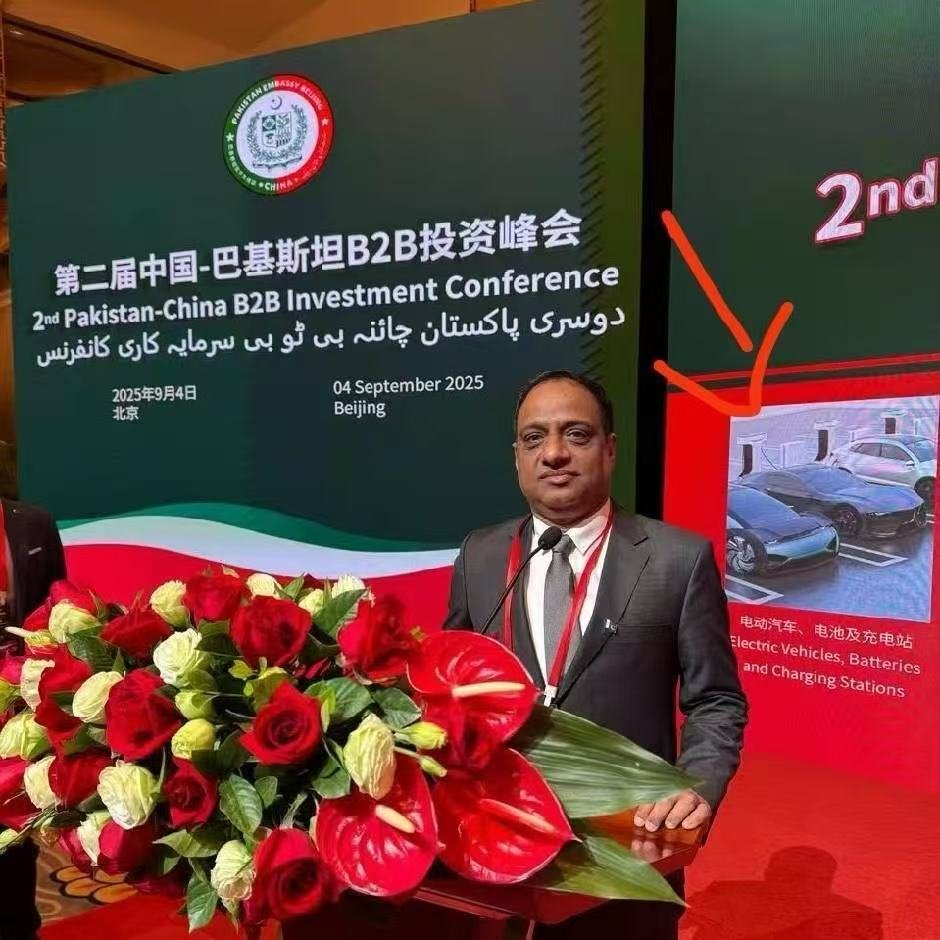
BEIJING, Mar 23: As 75th Anniversary of Pakistan-China Diplomatic Relations is being celebrated with enthusiasm in both countries, a Guangzhou-based Pakistani businessman with over a decade of experience in China has called for a renewed focus on expanding bilateral trade, particularly through increased Pakistani exports.
Ihsan Ullah, who has been engaged in trade between Pakistan and China for the past twelve years, described the anniversary as not only a moment of pride but also a timely opportunity to tap into the vast economic potential between the two nations.
Drawing from his experience, he emphasized that Pakistan holds strong potential to significantly boost exports to China, particularly in the minerals and agriculture sectors.
“Pakistan is richly endowed with natural resources such as marble, granite, and other minerals. With proper value addition, including processing and workforce development, these products can become highly competitive in the Chinese market,” he said.
He also highlighted the agriculture sector as a key growth area, noting that Pakistan’s fertile land, favorable climate, and capable labor force position it well to meet Chinese demand. However, he stressed the importance of aligning production systems with Chinese standards and entering structured agreements to ensure compliance with regulatory requirements.
Despite the opportunities, Ihsan Ullah pointed out several challenges hindering export growth. Most important among them is limited production capacity, which currently falls short of meeting the scale of demand in China.
“Enhancing production capacity must be a priority if Pakistan wants to fully benefit from this market,” he added.
He further underscored the issue of high domestic transportation costs, particularly for moving goods to Karachi. He noted that while international shipping from Karachi to China is relatively affordable, internal logistics remain inefficient and costly.
To address this imbalance, he recommended greater investment in railway networks and the development of cost-effective transport infrastructure. He cited China’s advanced logistics system—especially its efficient water-based transport and extensive network of ports and industrial zones—as a model Pakistan could learn from.
Another critical area identified was trade promotion and communication. According to Ihsan Ullah, many Chinese businesses lack awareness of Pakistani products, compounded by language barriers and limited access to information.
He suggested that Pakistan establish modern product display centers in key Chinese cities such as Guangzhou, a major industrial and commercial hub. Such centers, he said, would help showcase Pakistani goods and facilitate direct engagement with Chinese buyers.
“If we focus on improving production capacity, reducing transportation costs, and strengthening trade promotion, Pakistan can significantly increase its exports to China,” he stated, expressing confidence that annual export growth of at least $1 billion is achievable.
He also noted that beyond direct exports, Pakistan could benefit from value addition within China, enabling its products to reach broader international markets.
Concluding his remarks, Ihsan Ullah called for a clear and focused strategy to fully leverage the long-standing partnership between the two countries.
“As we mark seventy-five years of strong and enduring relations, it is essential to move forward with a practical approach that unlocks the full economic potential of this partnership for the benefit of both nations,” he said.